
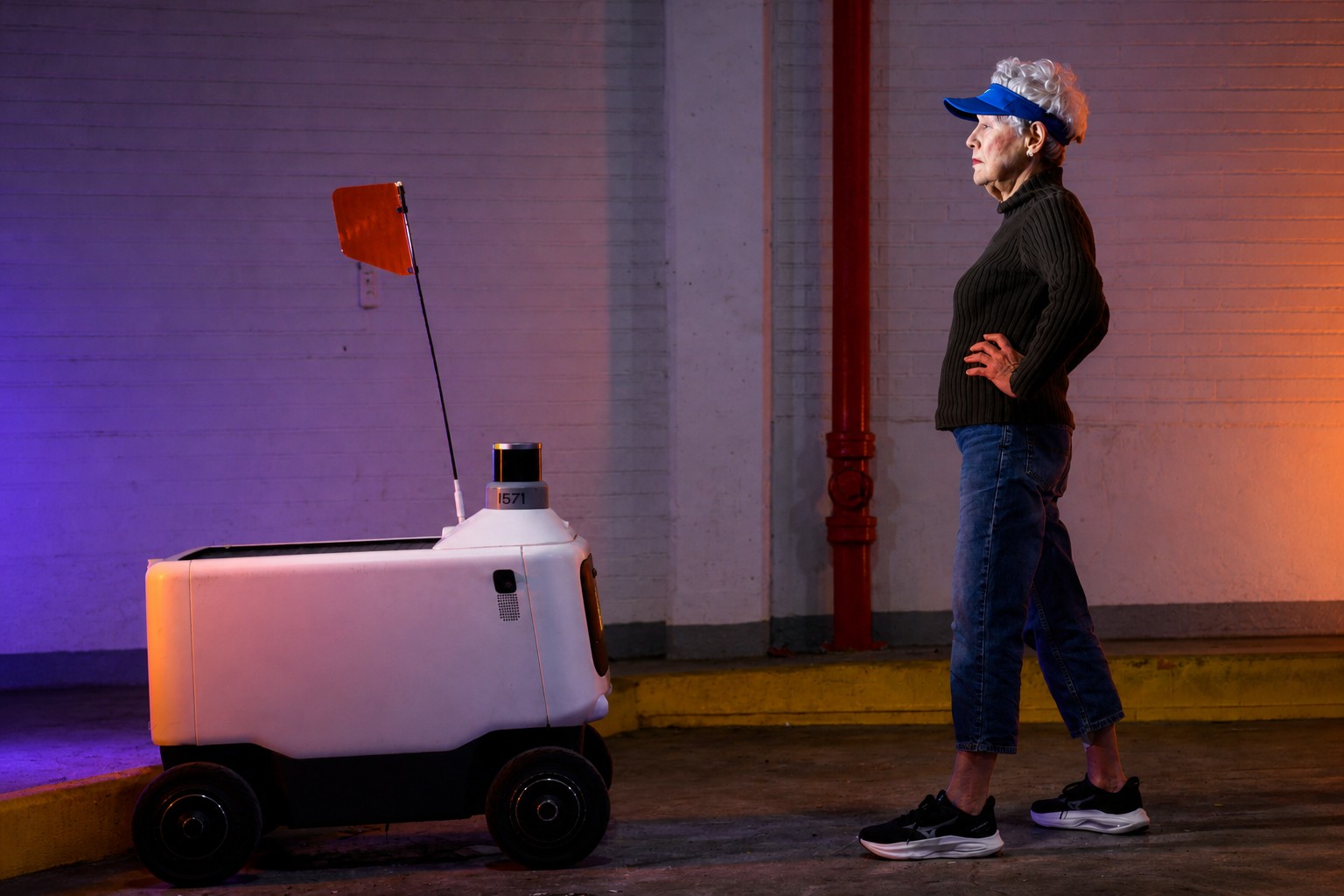
A Pennsylvania professor protests delivery robots
Protest and arrest
Marvin does not protest every day, but stops robots when she comes across them on the street. In her view, they take jobs away and create obstacles for people with limited mobility. Other passersby disagree: the protest could leave a customer without food they have already paid for.
One day, after getting a flu shot, Marvin saw a robot in a busy area and stood in its way. A crowd gathered, an argument broke out, and someone called the police, reporting an offense. Three officers told Marvin to move. She refused, explaining that she was protesting corporations in the same public space where the robots travel.
Marvin says the officers took her food, handcuffed her and led her to a patrol car. She kept arguing with them; it seemed to her that the officers took some time to decide why they were detaining her. In the end, Marvin was issued a fine for disorderly conduct: the police considered her to have interfered with a business. A court date has not yet been set, but she intends to vigorously contest the charge.
Marvin wrote When Old Technologies Were New: Thinking About Electric Communication in the Late Nineteenth Century, a book about the effects of electronic media on society. In 1985, she became the first woman to receive a tenured position at the Annenberg School for Communication at the University of Pennsylvania. The university now has an endowed chair named in her honor.
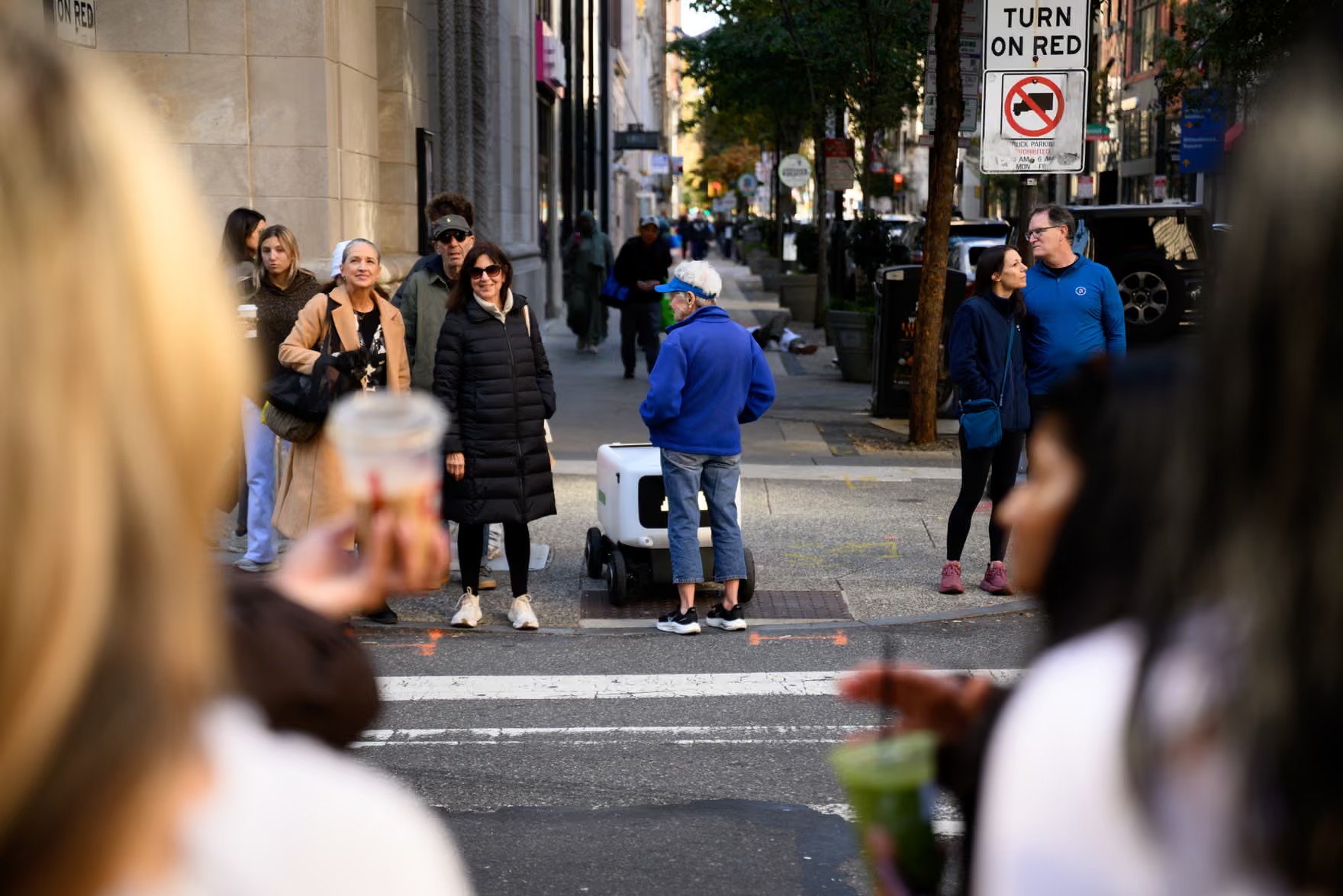
Avride robots in Philadelphia
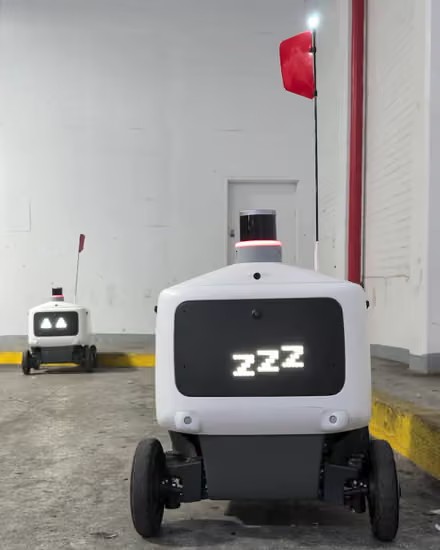
While waiting for the robots to set out, a reporter notices them gathering in an alley beside the Patriot Parking garage. It is unclear how many of the machines operate in Philadelphia: Texas-based Avride said their number varies with demand.
Two robots are in the alley. One displays Halloween images; the other shows the zzz symbols that indicate standby mode. An Avride representative explained that the company tries to make its robots look friendly so people will not be afraid of unusual machines on sidewalks.
Avride operates nearly 1,000 delivery robots across more than 25 college campuses and in cities including Jersey City and Austin. The company used to receive concerned emails from people who saw a robot in standby mode and thought it was lost or broken. After the screens began displaying zzz symbols to explain that the robot was waiting for an order, the emails stopped. Avride is aware of Marvin’s protests.
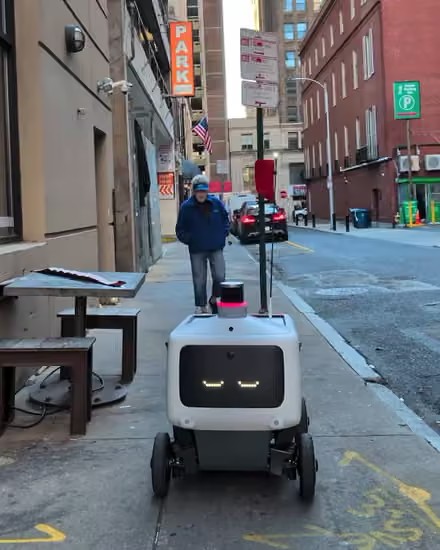
The reporter and the professor wait for about 40 minutes. Then one of the robots, number 1617, receives an order and heads from its parking spot to a nearby restaurant. The machine has cameras, sensors and AI-based software, but it does not recognize that Marvin is about to stop it. As the robot rolls onto Walnut Street, one of the city’s main roads, Marvin steps in front of it.
How passersby react
At first, people walk past without paying attention to the standoff. Then some begin to support Marvin. An elderly woman thanks her, a man in a business suit cheers her on, and another passerby says the gig economy is not working well for everyone.
Cadence, a 22-year-old recent graduate, recognizes Marvin by her blue visor and calls her a celebrity. She supports the protest and believes AI and robotics should help people, not take their jobs. Cadence says she is ready to support any small business that does not use AI, and values things made by people.
Children are more likely to notice the robots’ appearance than to debate employment. Toddlers point excitedly at the machines, while two children argue about whether a robot looks like a dog or a cat. One child, about seven years old, shouts “tin can” and says they have seen enough movies to know that machines like these will one day start hunting people.
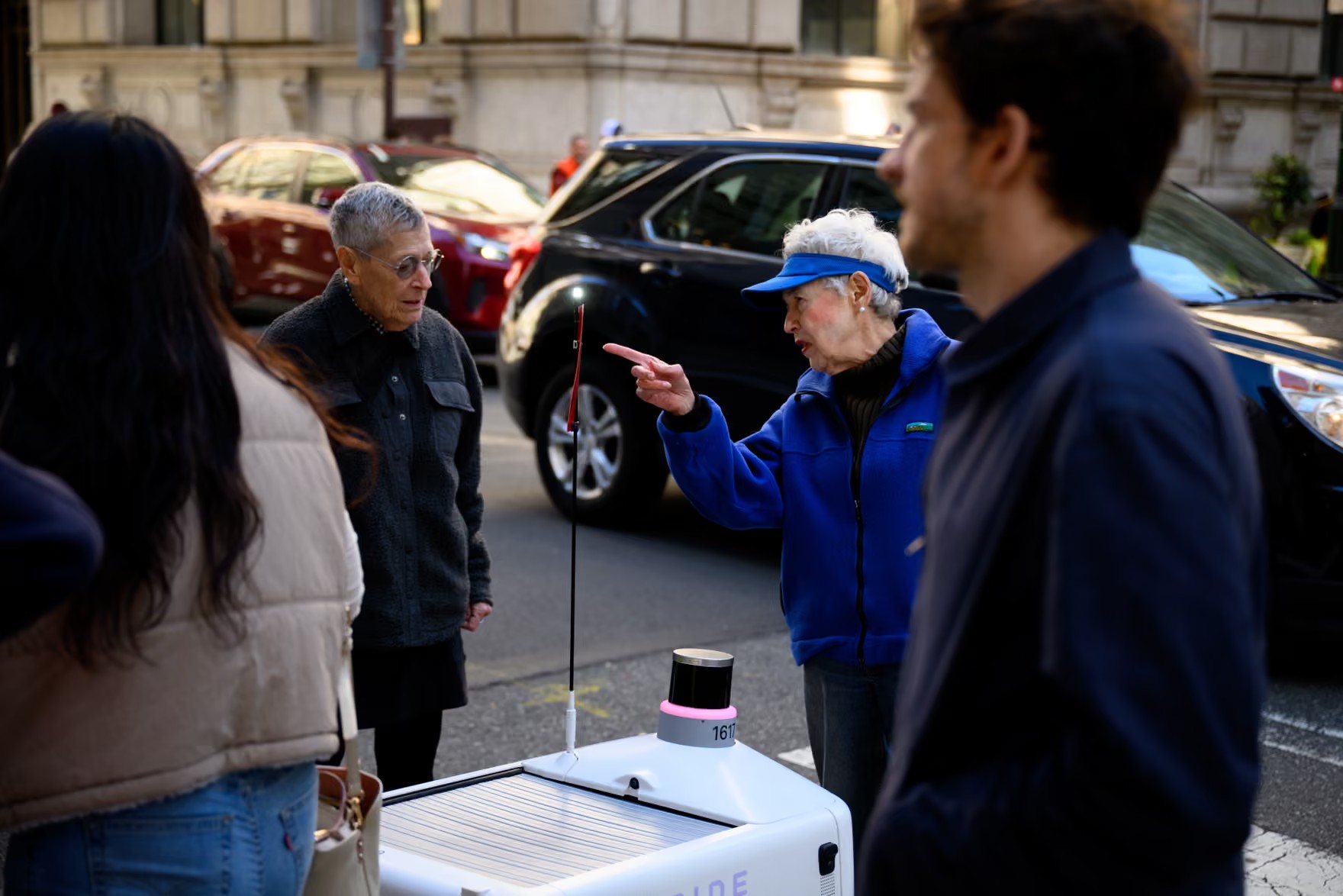
According to a recent Pew Research study, most Americans are skeptical of AI, and more adults expect it to have a negative impact than expect positive consequences. Protests against automation are visible elsewhere, too: in Philadelphia, the reporter saw a woman block a Waymo self-driving taxi and shout “LAME-O.” Such cars are being tested in the city with safety drivers monitoring them.
Robots become a familiar part of the streets
In Pennsylvania, delivery robots were authorized by Act 106 of 2020, which classified them as pedestrians. When Avride’s machines appeared in Philadelphia in March, passersby stopped to look and take selfies. Now most people simply ignore them. Similar normalization is happening in other countries.
In the United States, another company that uses delivery robots is Serve Robotics, one of the market’s largest players. Its fleet has 2,000 robots.
Marvin opposes robots on public streets, although she supports using AI for medical discoveries and considers robots appropriate for factories. She argues that the expansion of automation is not inevitable and that residents can influence whom public infrastructure serves. In Toronto, delivery robots were banned from sidewalks in 2021.
As Marvin gets ready to go to the university to prepare a class, the robot tries several times to go around her, then switches to standby mode. When the professor steps away, the machine starts up again and returns to the garage.
Dataist's take: The episode highlights two questions: how to introduce automation, and who has the right to determine its place in public space. In Philadelphia, robots have already been classified as pedestrians, while Toronto’s example shows that the rules can be different. Marvin continues to argue that residents should have a say in these decisions.
Daily AI news
Every day we pick what actually matters in AI and explain it plainly — no hype, no filler. Subscribe if you want to follow where the industry is going.
Only what matters — every day
Follow on X