
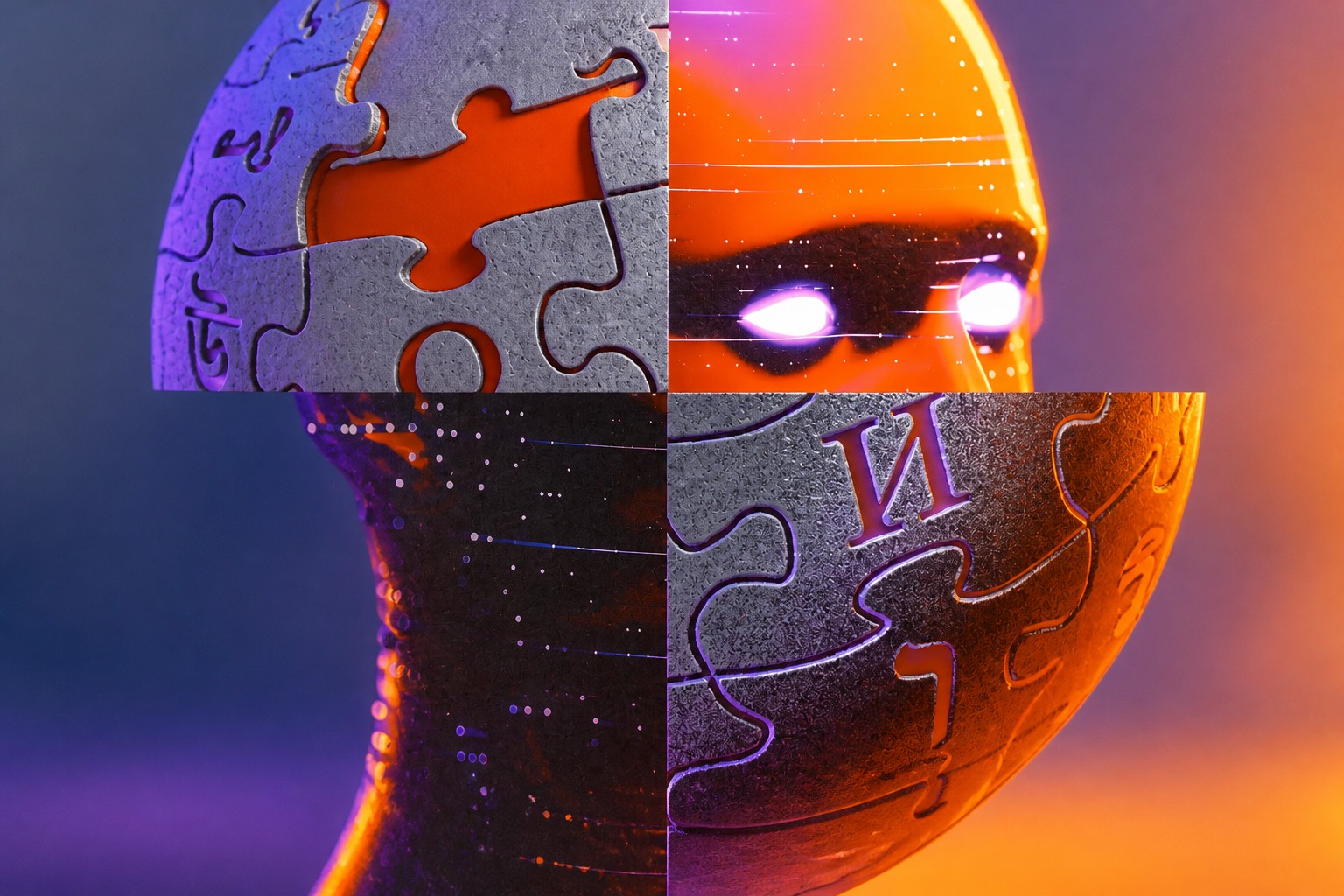
The danger was never only bad articles
Wikipedia spent years preparing for AI as a tool that might disrupt the encyclopedia. Some contributors hoped large language models would handle formatting, source searches, citations and missing links, leaving people more room for creative work. Instead, AI began changing the encyclopedia itself: by March 2026, the project had banned using large language models to write articles, while allowing translation and minor copyediting.
That policy is a defensive line, not a solution to the larger problem. Wikipedia’s reach is falling, readers are less likely to arrive from AI chatbots, and the volunteer community is doing more work with fewer contributors. The deeper question is whether a human-edited encyclopedia can remain useful when people increasingly get answers without reading one.
In 2019, then Wikimedia Foundation chief Katherine Maher warned in The New York Times that AI was too often treated as a universal fix and a scalable substitute for people. The possibility that machines could unsettle human control was already on the table. What was harder to anticipate was how quickly the pressure would move from the quality of individual articles to the role of the encyclopedia.
Early signs were visible. Google trained AI to write “Wikipedia-style articles” in 2018. A Princeton University study published in October 2024 found that about 5% of nearly 3,000 new English Wikipedia articles from August of that year contained substantial AI-generated text. Some pages retained telltale traces, including prompt fragments such as “Here is your Wikipedia article.”
The response hardened as contributors encountered generic prose and fabricated sources. By March 2026, the project’s position was that AI-generated articles too often violated Wikipedia’s basic principles.
A shrinking audience, and a thinner pipeline
Wikipedia’s 25th anniversary brought a stark contrast between its historical scale and its current trajectory. Pew Research counted 1.9 trillion page views from 2015 to 2025, an average of 508 million a day. Yet since 2022, the encyclopedia had lost almost a quarter of its readers, or more than 1.1 billion visits a month, according to longtime contributor Christophe Henner.
AI may be taking some of that attention. But the more immediate concern is what happens when people stop arriving at the source. One count found that users clicked through from AI chatbots only 0.33% of the time, compared with closer to 9% for Google search. Wikipedia needs readers not only to consult its work, but potentially to become editors themselves.
Henner warned that the project could become “a historical artifact that AI was once trained on… a footnote in the training data of models that moved on without us.” The work is already concentrating among fewer contributors: a “small club working harder and harder to maintain something fewer and fewer people see.”
That is why the argument over AI writing is also an argument over labour. If contributors become scarcer, the temptation to fill the gap with machine-generated material grows. Critics fear a cycle in which more AI content means more cleanup for the remaining volunteers, whose work then looks increasingly like curation of a machine-produced harvest.
The missing piece is not simply a better content policy. I think the harder question is what Wikipedia offers when the act of reading an encyclopedia itself is losing ground. Henner described a generational shift: younger users scroll rather than search, and consume fragments rather than articles. AI, in his account, accelerates that change; it did not start it.
The encyclopedia was never just a database
Wikipedia inherited an older ambition: that collecting and organizing knowledge could reveal how the world fits together. Herbert Wells imagined a “Permanent World Encyclopaedia” as a counterweight to nationalist projects, but also as an instrument that could help a world government extend its power. A universal store of knowledge might serve internationalism and still make centralized authority more capable.
That tension sits inside the encyclopedia ideal. The Enlightenment version sought an objective account of the world, built from reason and shared facts. But the idea that one system can gather knowledge into a single, authoritative whole has always raised a question of who controls it—and what gets treated as truth.
AI makes the old ambition feel newly plausible. If machines could exceed human understanding, the encyclopedia might appear to have reached its endpoint: not merely a collection of human knowledge, but material for a system that claims to know more than its contributors. My guess is that this is why the prospect feels more unsettling than a flood of mediocre articles. It turns a tool for organizing knowledge into a candidate for final authority.
The announcement of a ban on AI-written articles says what Wikipedia will not accept. It says less about how the project can bring readers back, renew its contributor base or compete with answers that arrive without a click. Those are not problems a rule about authorship can settle.
What the human work preserves
Wikipedia’s case for itself may lie less in the finished pages than in the process that produces them. The project is built from people with different backgrounds working toward shared understanding, slowly and imperfectly. That is a different promise from a machine that presents a polished answer as if knowledge had no history, disagreement or human judgment behind it.
A collection of facts can be copied into a model. A community cannot be reduced so neatly. If the encyclopedia is to remain more than training material for systems that move on without it, its human process has to matter to people who may never need to open an article. The pressure on Wikipedia is therefore not only to protect what it knows, but to show why knowledge made together is worth returning to.
Daily AI news
Every day we pick what actually matters in AI and explain it plainly — no hype, no filler. Subscribe if you want to follow where the industry is going.
Only what matters — every day
Follow on X