
A contract built around orders
Founded in 2015 and based in Redwood City, California, WindBorne supplies real-world measurements to a deep-learning weather forecast model. It already works with the US government, including the National Weather Service, the Air Force and the Navy. The Air Force agreement is the largest contract the company has participated in.
The deal was awarded without a competitive selection process. Co-founder and CTO Andrey Sushko told TechCrunch that the government judged WindBorne to be the only company able to deliver the required global data collection for these operations. Company leaders expect more orders.
Sushko said the contract would help expand the balloon fleet and fund research and development, including improvements to the equipment and the capabilities of the vehicles.
In August, CEO John Dean told TechCrunch that WindBorne had raised $37 million in a Series B round to keep expanding. Earlier this summer, the company released WeatherMesh 6, which it says is more accurate than the European Centre for Medium-Range Weather Forecasts’ traditional physics-based model.
Better forecasts still need better data
AI weather forecasting has become one of deep learning’s most productive applications since transformer architectures emerged and ECMWF released a large weather dataset several years ago. Instead of relying only on supercomputers solving complex approximations of atmospheric physics, models can learn from decades of observations and produce forecasts faster.
Leading research labs and government institutions have produced AI forecasts more accurate than traditional ones. But neither approach is sufficient on its own: understanding the weather still requires both. Google DeepMind’s new weather model adds useful capabilities, and its cyclone-forecasting tools are seeing increasing use by the US government during hurricane season.
That makes WindBorne’s contract notable beyond its size. Better models depend on observations, and the company is being paid to gather them. In August, WindBorne became the first organization to send an unpowered aircraft into the eye of a typhoon to collect data.
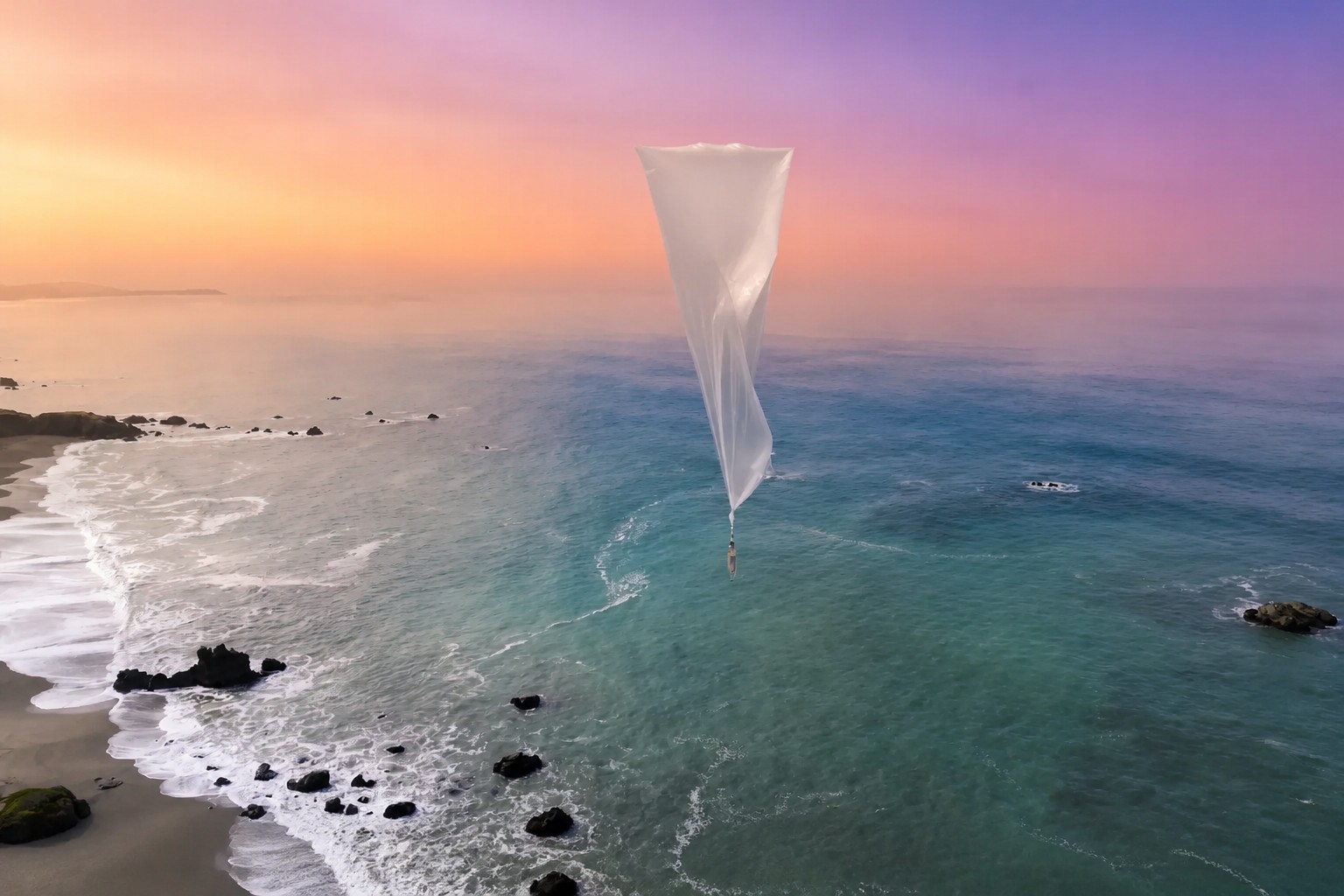
Its balloons change altitude by releasing air or dropping sand as ballast, allowing winds to carry them in the desired direction. Sushko said the typhoon flight depended on accurate wind and weather models to plan the route, as well as a fleet large enough to put vehicles in the right places. He described it as one of the first cases of a deep-learning model being used for real operational decisions.
The missing test
I think the contract’s most consequential detail is not the ceiling of $49 million but the link between data collection and operational use. WindBorne says better models helped guide a balloon into a typhoon, while the Air Force deal can finance a larger fleet. That is a credible feedback loop, but the announcement gives no measure of how much the added observations improve forecasts—or how the government will judge the results.
The agreement ties the company’s growth to military demand for data in particular places and periods. Its value will depend on whether those orders turn a promising demonstration into a sustained source of measurements that models can use.
Daily AI news
Every day we pick what actually matters in AI and explain it plainly — no hype, no filler. Subscribe if you want to follow where the industry is going.
Only what matters — every day
Follow on X