
A campus on protected land
Great Torrington sits above the River Torridge in a landscape of wooded slopes and flower-rich meadows. The town is part of a UNESCO biosphere reserve. Xlinks has reserved about 344 hectares (850 acres) for the campus, which would include five buildings from 50 to 130 feet tall. The company says only a third of the site would be developed; the rest would remain accessible to visitors or become new wildlife habitat.
The site plan obtained by campaigners shows that the two largest buildings would each measure 335 by 267 metres and cover roughly nine hectares (22 acres). The campaign group estimates each could fit Exeter Cathedral 18 times.
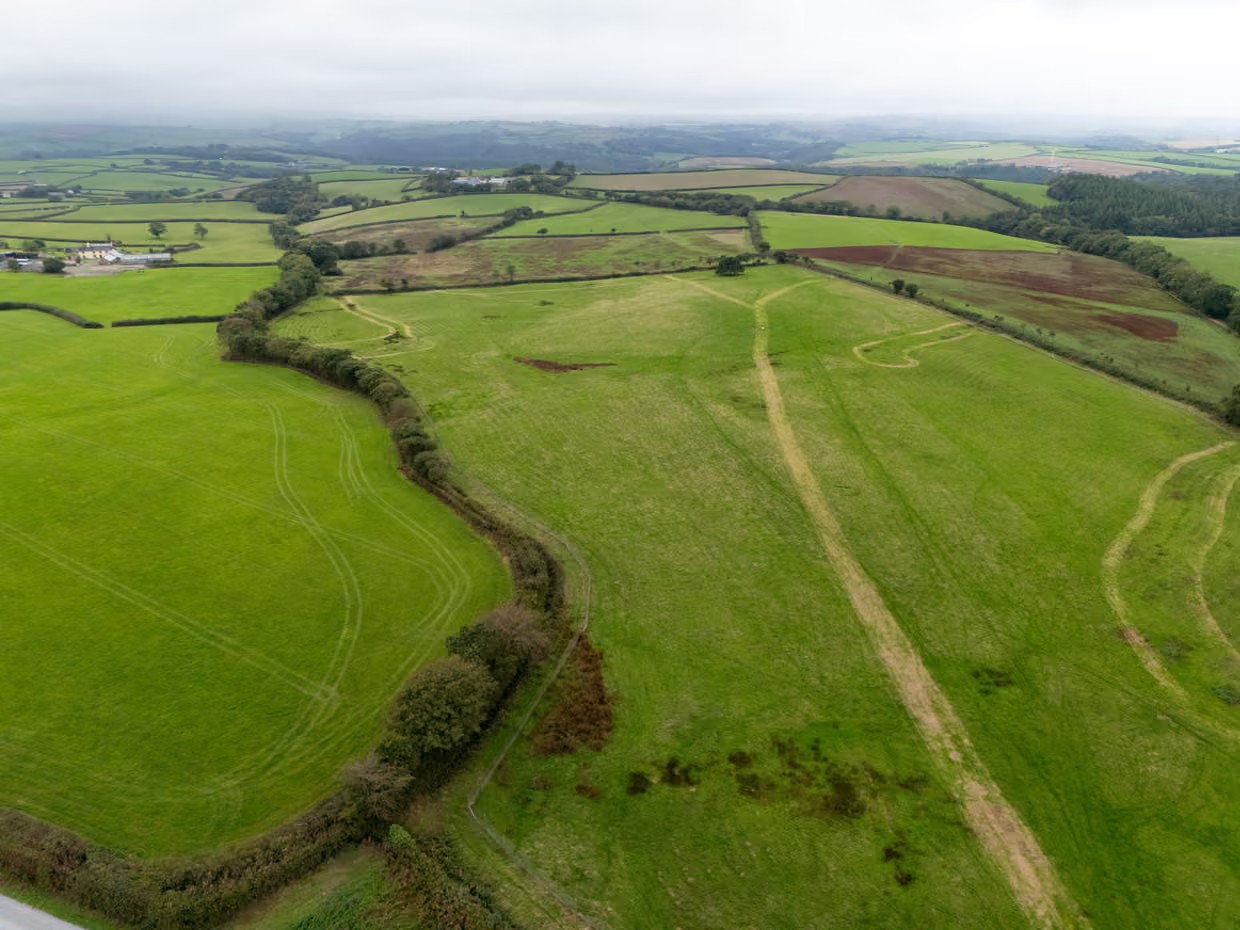
An aerial view of part of the land where the proposed 850-acre AI datacentre and BESS facility will be built in Great Torrington. Photograph: Finnbarr Webster/Getty Images
Source: theguardian.com
The battery system would comprise 1,720 containerised units, with a capacity of 1.8 GW. That is far larger than the UK’s largest operating battery site, a 100 MW installation in Bramley, Hampshire.
The UK needs large batteries to balance electricity supply and demand as wind and solar generation grow. The government estimates the country will need 23–27 GW of battery capacity by 2030 to meet its clean-energy goals, a “very significant increase.” But a House of Commons Library study says the government has no estimate of how much land that expansion will require, no specific siting rules and no final tally of the number or total capacity of existing systems.
That gap is part of why Devon campaigners describe battery development as a “regulatory Wild West.” Their concerns about the proposed campus include water use, runoff that could contain PFAS, air pollution, continuous background noise, and fire and safety risks from the batteries.
The dispute over who knew what
Xlinks first announced its plans publicly this summer, calling for collaboration with residents. But documents obtained through information requests show the company had held confidential talks with Torridge District Council officials since March 2025. In April, the council sent a letter expressing “support in principle” before an environmental assessment was published or public consultation began, and more than a year before the project announcement.
The council told The Guardian that preliminary consultations are customary and confidential. It said the letter did not approve a project, but was intended to indicate whether the proposal was acceptable in principle from a planning perspective.
In a letter dated 18 December 2025, officials and developers discussed contacting a sixth-form college in Exeter and planning stakeholder engagement, including whom to approach and when. Emily Clark of Devon Datacentre and BESS action said the correspondence and closed meetings over the previous 18 months made it seem as though some officials had already decided the outcome. She questioned how the country’s largest and most expensive infrastructure project could have been discussed almost entirely behind closed doors.
The project’s water plan is another point of contention. Xlinks says the centre will reuse water to remove heat and rely mainly on rainwater to replenish supplies. But a response to an information request said annual use could reach about 2.9 billion litres in extreme conditions, such as severe heat and drought. The company told The Guardian that estimate came from an outdated design and that an updated version would be presented during public consultation and included in its planning application.
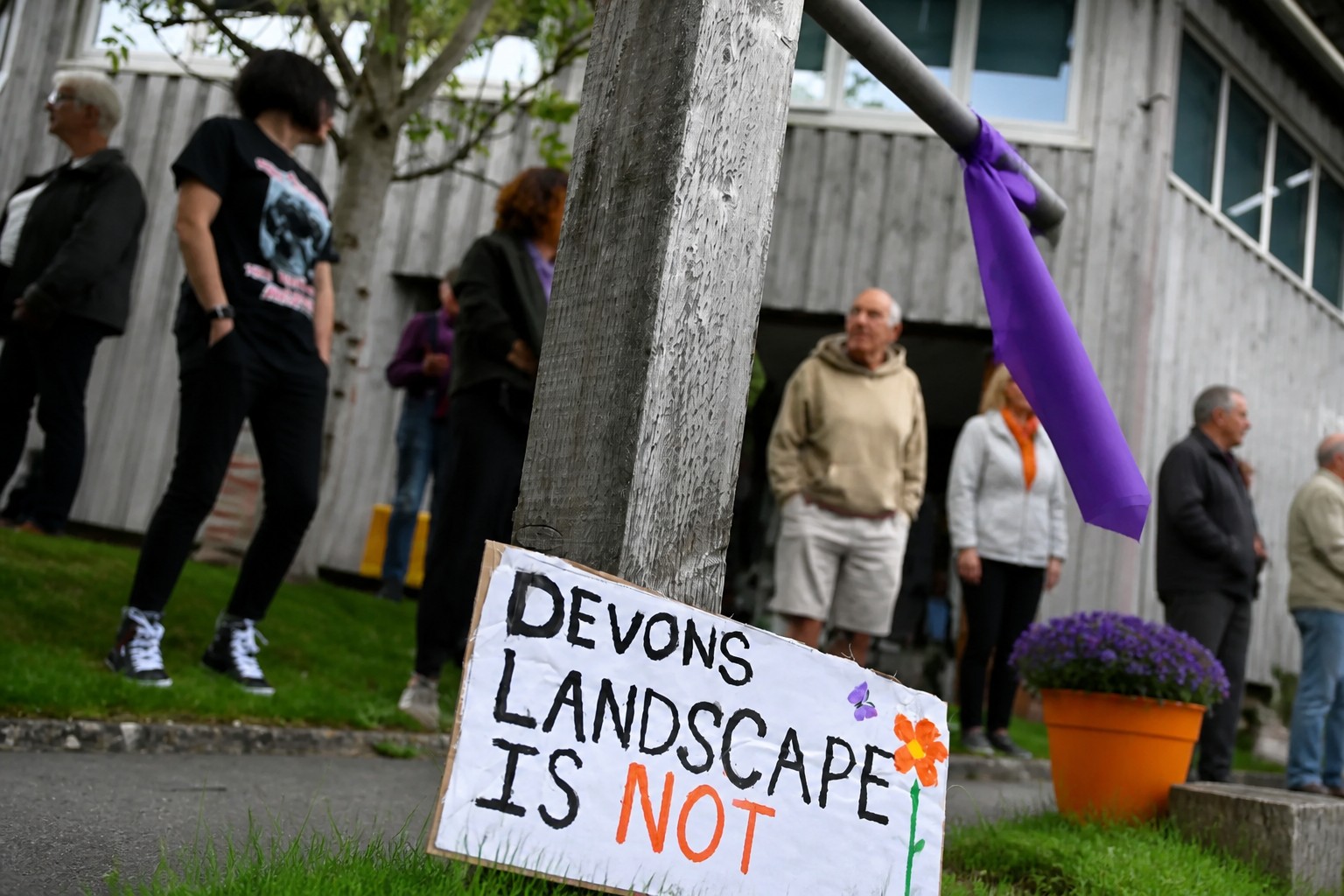
Tension rose this week when protesters gathered outside Torridge District Council to demand answers about the private talks and scrutiny of the proposal. Council chair Doug Bushby threatened to call the police over what he described as “unsubstantiated and baseless allegations, insults, harassment and intimidation.” He said any planning applications would be considered under the same legal, professional and working rules as others.
Xlinks has also approached parish councils about meetings without the public present. On 18 September, Monkleigh Parish Council said communications firm Coast Communications had proposed a private meeting on the company’s behalf. The parish council wanted to publish minutes and a recording, but was refused; it ultimately declined the invitation.
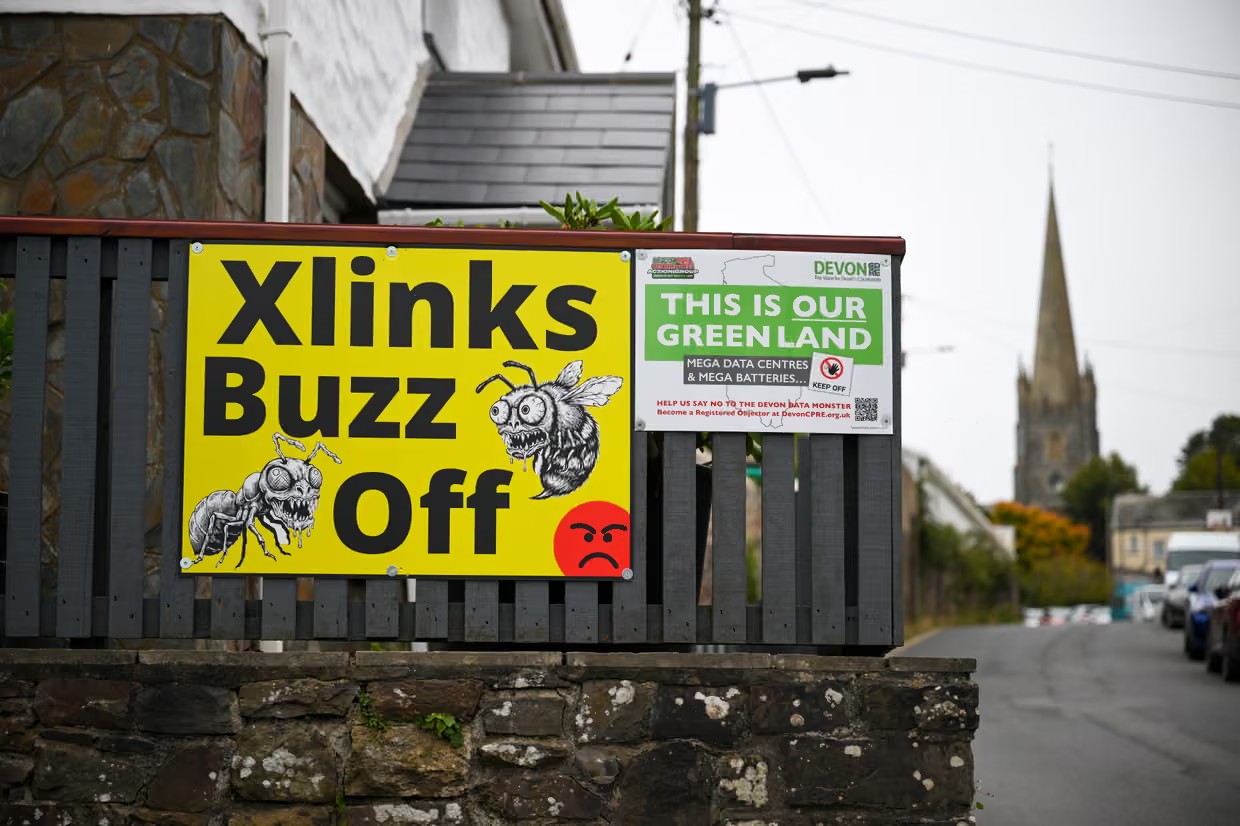
Momentum has been building against Xlinks, the company proposing the site, who say it would bring significant economic investment, including up to 1,200 jobs. Photograph: Finnbarr Webster/Getty Images
Source: theguardian.com
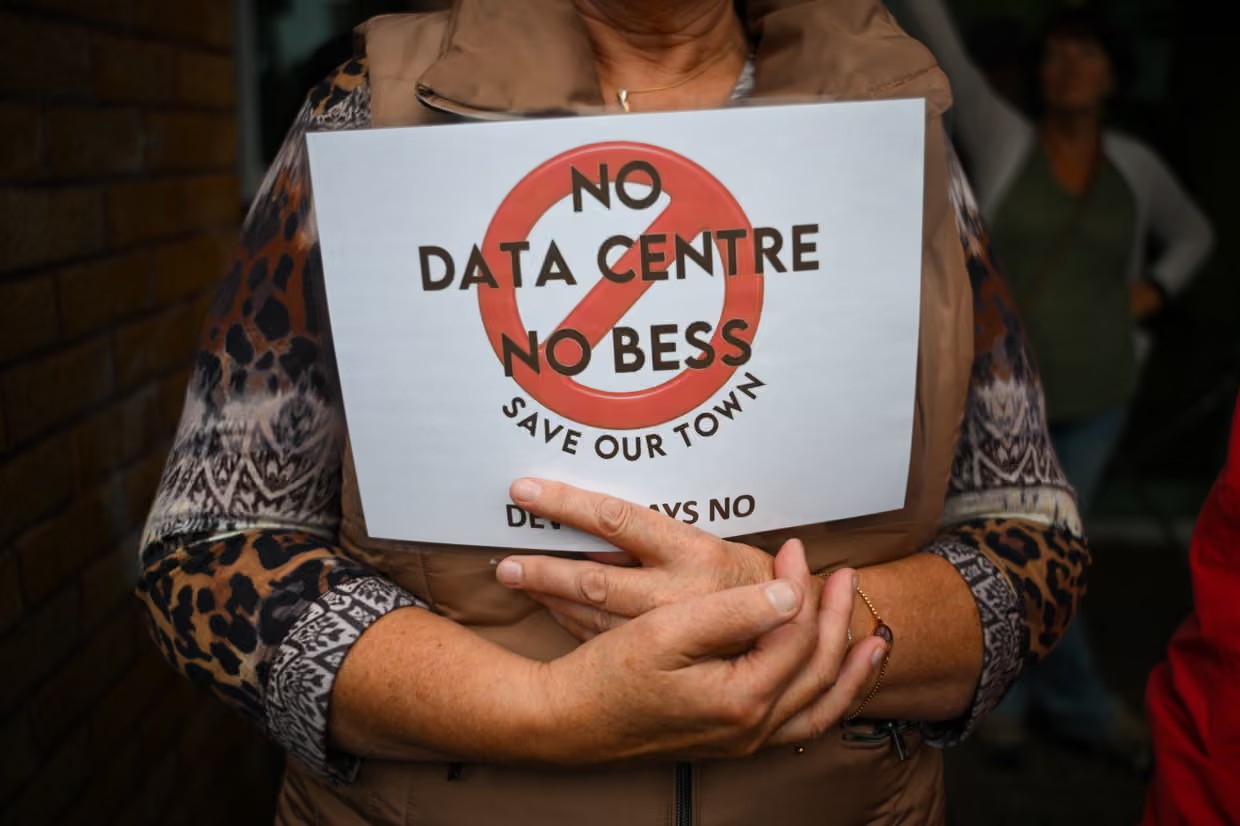
Opposition to the proposed AI datacentre has drawn thousands of people into a campaign across north Devon. Photograph: Finnbarr Webster/Getty Images
Source: theguardian.com
A company with a history in North Devon
Xlinks previously proposed bringing electricity generated by solar and wind power in Morocco to the UK via undersea cables, which would come ashore in North Devon alongside a new substation. In 2024, the government declined to support the project, saying it was not in the UK’s national interest and did not fit the country’s domestic energy strategy.
The company now says its £13.8 billion data-centre and battery project would bring substantial investment to the region, provide 600 to 1,200 jobs and create infrastructure for clean energy. It says it is surveying local nature and wildlife, plans to exceed the legal requirement to improve biodiversity by at least 10%, and will use terrain, landscaping and existing trees to reduce the buildings’ visibility. An environmental impact assessment is under way, and mitigation measures would be included in the design and attached to planning permission.
Xlinks had planned public consultation for July but postponed it until the end of the year, according to the district council. The council says it will review any proposals and publish details on its planning portal once an application is submitted. The Department for Energy Security and Net Zero says the national energy-system operator is developing the country’s first strategic spatial energy plan, intended to make energy planning more coordinated, create jobs in communities and reduce bills.
I think the project’s central test is not whether Xlinks can list benefits or mitigation measures; it is whether residents can examine those claims before key decisions feel settled. The company’s earlier energy proposal was rejected, while this one combines a data centre and a battery installation at a scale with few local precedents. Until the consultation happens, the promised jobs and environmental gains sit alongside unanswered questions about land, water and oversight.
Daily AI news
Every day we pick what actually matters in AI and explain it plainly — no hype, no filler. Subscribe if you want to follow where the industry is going.
Only what matters — every day
Follow on X