
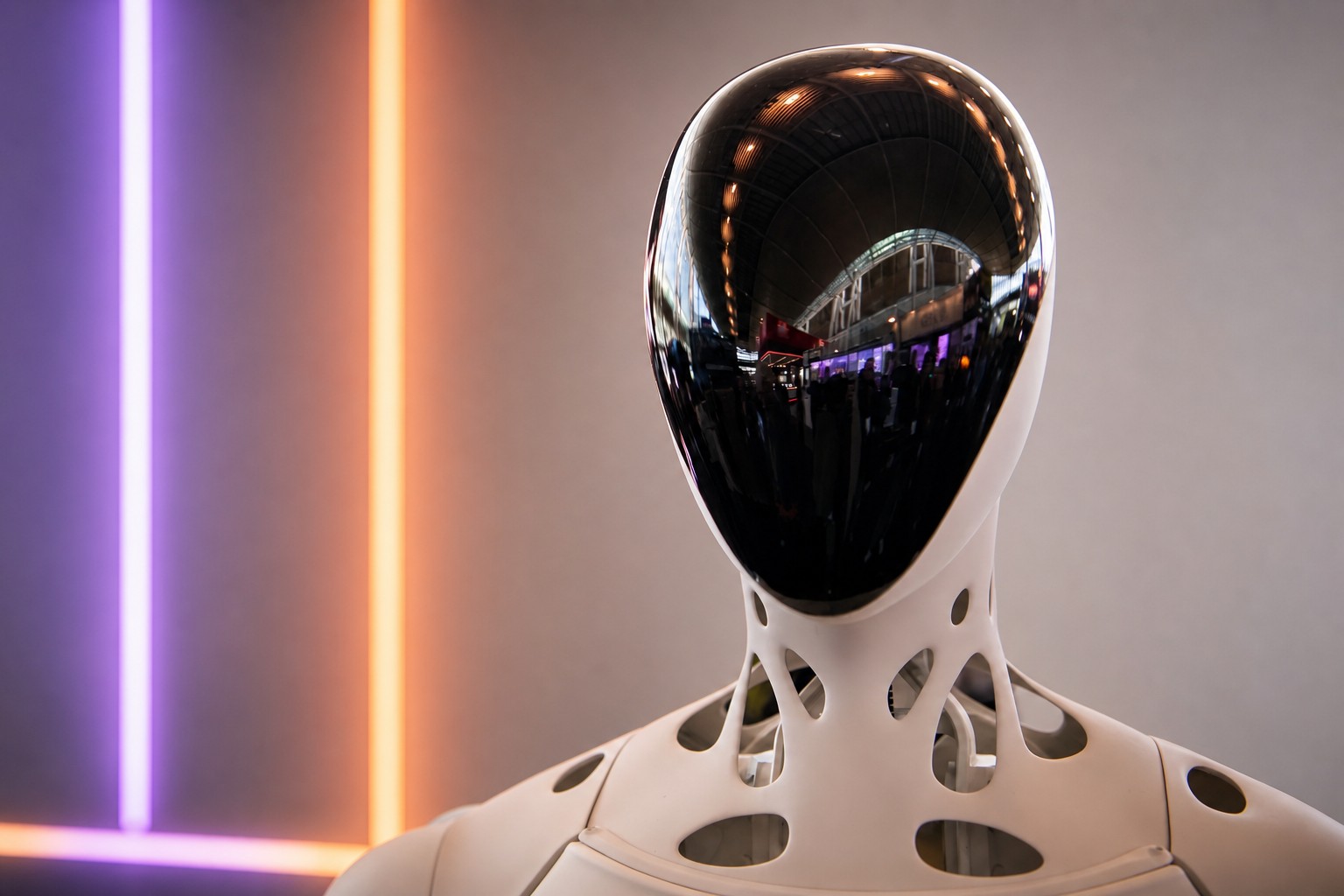
Xpeng's robotics arm raised more than $900 million earlier this week at a post-money valuation above $6.3 billion. IDG Capital led the round; Gaorong Ventures, Tencent and Alibaba joined. Xpeng calls it the largest single private financing stage in the history of China's embodied AI industry — AI systems built directly into physical machines. It is also the clearest evidence yet that Chinese carmakers have collectively decided humanoid robots are the next profit pool. BYD has shown a humanoid called Xiao Di. AiMOGA has reportedly begun preparing for a listing this month. Changan, GAC, Li Auto, SAIC and Seres are all developing their own.
The enthusiasm did not begin this week. Tesla chief executive Elon Musk and his Optimus robot supplied the template, and Boston Dynamics fed the feed with Atlas clips. Underneath the marketing there is real movement: the physical capability of these machines is improving, and researchers believe the AI methods behind large language models will let complex robots learn almost any task.
Xpeng is the Chinese carmaker most deliberately shadowing Tesla, according to Michael Dunne, chief executive of the consultancy Dunne Insights, which operates out of San Diego and Singapore. Dunne says Xpeng follows Tesla's moves and repeats them, is more focused on autonomy than its peers, and was the first to take humanoid robots on at scale. Founder He Xiaopeng, he says, is a tech billionaire known for reacting fast and changing course when he wants to — and one who sees very little profit coming from cars, while robots look more promising.
That last observation is the most important sentence in the story, and it is about cars, not robots. The thesis being funded here is not that humanoids have found a market. It is that the core business will not pay.
He Xiaopeng and Xpeng co-chairman Brian Gu are convinced enough to have put their own money in — roughly $100 million in the recent round, according to The Wall Street Journal. Founders backstopping their own raise can be read two ways: as conviction, or as a round that needed help closing. Xpeng's bet is Iron, a humanoid with a realistic human form intended for commercial use. What the commercial use is has not been described.
The manufacturing case is stronger than the demand case, and everyone involved knows it. Dunne's view is that Chinese carmakers already have all the hardware they need to build these robots; the open question is whether they can catch Tesla on the AI. That is an uncomfortable split, because hardware is precisely the layer Chinese industry has repeatedly proven it can commoditise — which means the advantage being valued at $6.3 billion is the one that erodes fastest, while the part that decides the outcome is the part nobody has yet shown.
Elsewhere, the field is crowded. Agility Robotics, Apptronik and Figure are all pushing humanoids toward mass commercial use. Mobileye, the automotive technology supplier, bought the young humanoid developer Mentee Robotics for $900 million earlier this year — the same headline number Xpeng just raised for a minority stake in one division, which is a useful calibration of how the market is pricing this category.
The closest thing to a deployment belongs to Hyundai-owned Boston Dynamics. Hyundai plans to bring an Atlas humanoid to its Georgia plant this year, and intends to have robots doing work such as sorting parts into sequence by 2028. To speed Atlas development it is working with Google DeepMind, and it is opening a US site this year — a robotics manufacturing application centre — where robots will be trained to reproduce movements like lifting and turning.
Sorting parts into sequence, by 2028, is what the most advanced programme in this field is promising. It is a task that fixed automation has handled for decades. That gap between the valuations and the stated job is the part of the story that nobody is pricing: the humanoid form factor is being funded as if it were general-purpose, and demonstrated as if it were a slightly more flexible conveyor.
Rivian is the dissent worth noting. It is experimenting through a spun-out company, Mind Robotics, and its robots are not expected to look like the humanoid machines everyone else is building. That is a bet that the human shape is a constraint rather than a feature — and if it turns out to be right, the manufacturing advantage the Chinese carmakers are being valued for will have been built for the wrong body.