i
DATAIST
Back to feed

Robotics

Models driving physical devices: from manipulators to the gap between seeing and doing.

3 articles

Xpeng's robotics unit raises $900 million at $6.3 billion valuation

Xpeng's robotics arm raised more than $900 million earlier this week at a post-money valuation above $6.3 billion. IDG Capital led the round; Gaorong Ventures, Tencent and Alibaba joined. Xpeng calls it the largest single private financing stage in the history of China's embodied AI industry — AI systems built directly into physical machines. It is also the clearest evidence yet that Chinese…
Video models become the second base for robot policies

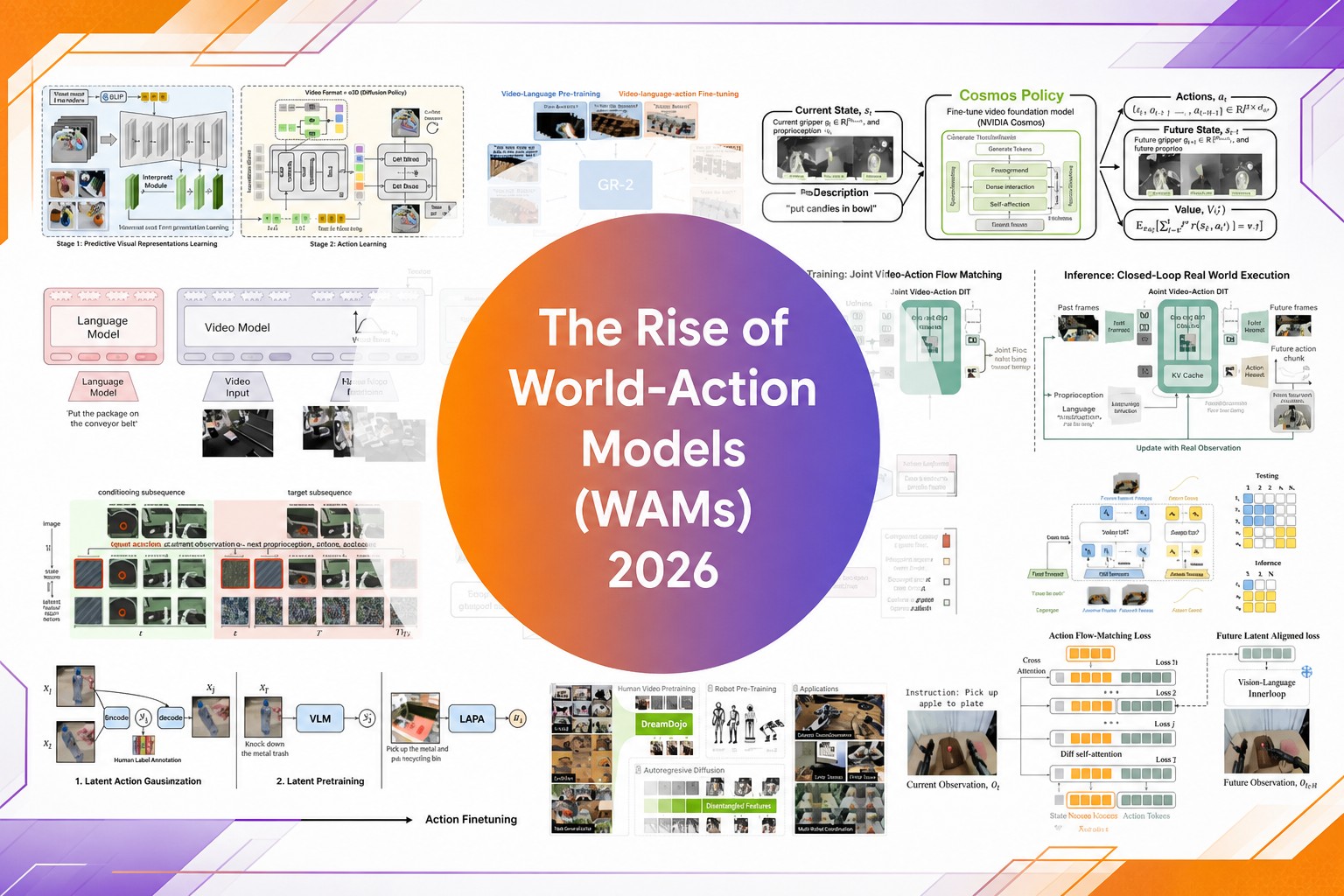
A year ago the daily Scholar Inbox digest of robotics papers was almost entirely VLA — vision-language-action models built on a pretrained vision-language backbone. Now a second acronym turns up nearly every day: WAM, world-action models, which start from a pretrained video or world model instead and predict future states and robot actions together. In October 2025, in a piece called "The…

Embodied-R1 points instead of acting and hits 87.5% on real robot tasks

Robots increasingly see the world through a camera and read our written instructions. But that "knowledge" often fails to turn into the right action: the model knows what a cup is, yet not where to put it or how to get around the objects next to it. This distance between vision and action is the seeing-to-doing gap. The Embodied-R1 team proposes…