
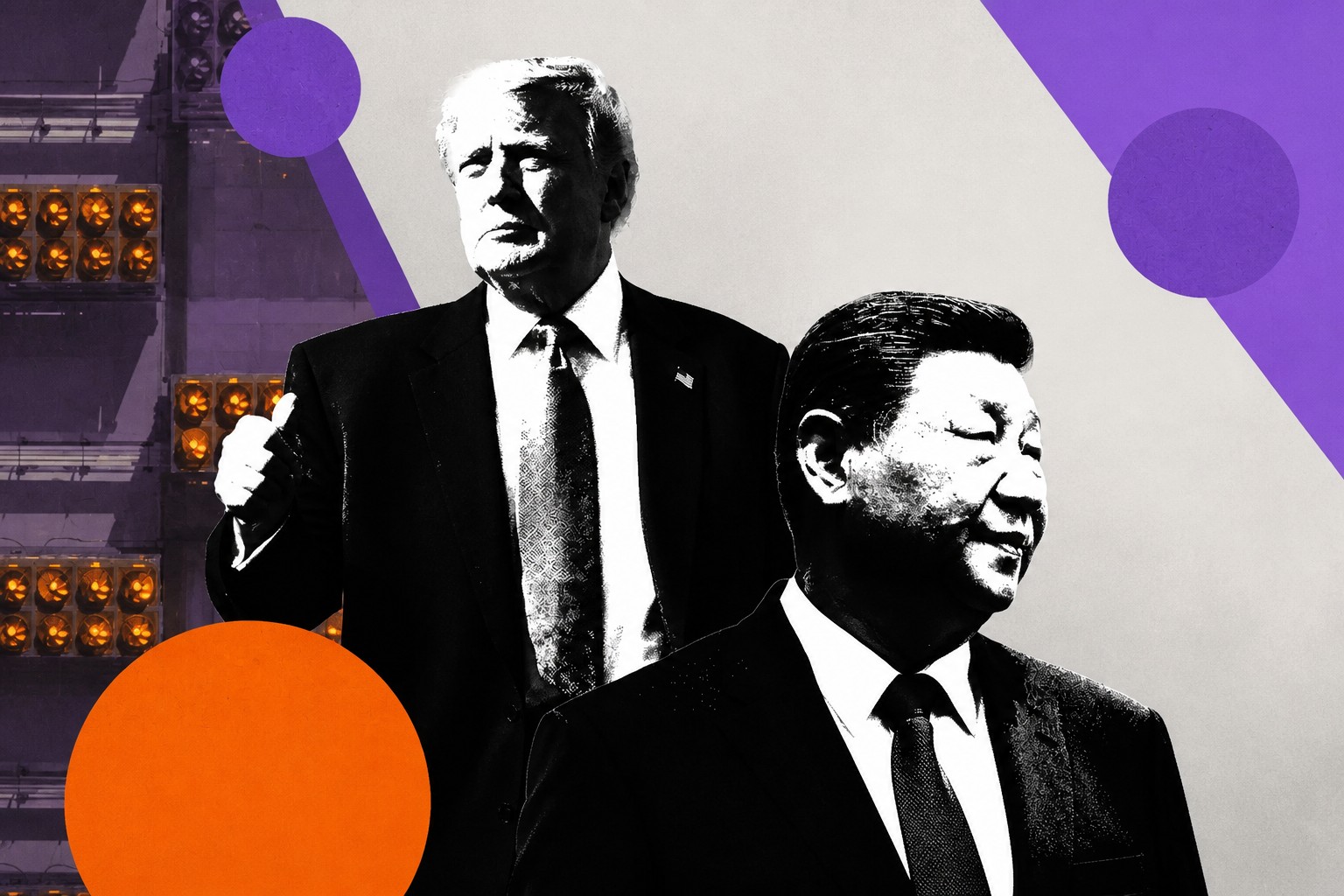
Two hundred accounts are carrying the weight of the argument that China turned Americans against data centers. X said in late August it had found them, linked to China, helping to spread anti-data-center talking points. X also found 200,000 accounts in the same botnet, which makes the data center portion a tenth of one percent of it. Over the same period, the share of Americans who say they would oppose a data center in their neighborhood went from 42% to 75%.
Those two numbers are the story. One of them moved 33 points in a year. The other is a rounding error inside a bot network, and it is being offered as the explanation for the first.
The claim travelled fast anyway. Axios described what was happening as the covert stoking of American rage at data centers, and pro-industry politicians and right-wing activists pushed that version out through X itself. Days after the platform's report, Donald Trump joined in, posting on Truth Social that China could not be happier about the American anti-data-center movement and defending the buildout with a call to let the data rule. This is the president who has actively backed data center construction, which has not stopped a section of Republicans, working alongside well-known technology executives, from keeping the China explanation alive.
They are doing it while their own side moves. Ahead of the midterms, politicians in both parties have changed their tone, including Texas Governor Greg Abbott and Pennsylvania Governor Josh Shapiro, both of whom previously supported data center construction and are now working to show voters they are taking a hard line on the infrastructure people resent.
The China version did not begin in August. In the spring, several reports from right-wing think tanks were picked up by legislators and commentators to accuse the Chinese Communist Party of seeding anti-data-center narratives among Americans. In June, OpenAI blocked a group of users it said were linked to the Chinese government and were testing how audiences reacted to narratives about AI infrastructure.
Read OpenAI's June report closely and it undoes the case it is cited for. The company acknowledged that the accounts it found were using discontent with data centers that already existed. Riding a movement is not manufacturing one, and it is the strongest documented item in the entire file. X's recent purge may involve the same accounts: they share hashtags and images, and several of the pages point to the same obscure local news item. China experts say the main report circulating in Washington rests mostly on insinuation and supposition rather than firm evidence.
The measurement supports the same conclusion. Graphika, which analyses social media sentiment and has been tracking data center discussions, reported in June that most of the protest activity it observed originated inside the United States. This week Tyler Williams, Graphika's vice president of intelligence analysis, confirmed nothing has changed: there is still very little substantial evidence of foreign interference.
There is also a contradiction nobody on that side has resolved. The right-wing effort to blame China for the fights over data centers coincided with Trump administration officials complaining that Chinese companies are stealing American AI work. If China benefits from the infrastructure its own models run on, it is hard to explain why it would deliberately poison the politics of that infrastructure.
Which leaves the question of why the story keeps getting told. My read is that its appeal is structural, not evidentiary: it is the only available explanation that requires the industry to change nothing. Blame a foreign operation and the environmental objections recede, along with a political system built to suit large holders of capital and a broad resistance to AI itself. Every other explanation ends with a cost to somebody in the room.
Andy Masley, a blogger popular on X among data center supporters for his pro-industry posts, has noticed the same reflex from inside the tent. He says that the moment he brings up China, the people he is talking to go quiet. He calls it a convenient belief, notes his own political bias as a Democrat, and suspects that some technology activists spent years tuning their positions for a right-wing audience and concluded that China talk plays well with it. He has publicly asked the industry to share anything it has on Chinese interference, and says nothing convincing has come back. His blog is funded mainly by a grant from Coefficient Giving, tied to effective altruism philanthropy, which is worth knowing and does not make the observation less accurate.
Louise Matsakis, a senior business editor at WIRED who covers China, puts it down to a basic misunderstanding of what Chinese influence campaigns actually look like. She is unsurprised that the story moves quickly through part of the right, given a long habit of explaining American problems through Chinese action, but argues that panics like this one say less about China than about a preference for handing responsibility to an undefined outsider rather than examining what is happening at home.
What is happening at home is generating the opposition on its own. Paresh Dave has reported on Meta's plans to build a robot workforce inside data centers; he was surprised to learn that some data centers run cafeterias with full kitchen staff. Automating the technical work and cutting on-site headcount lets operators save not only on the core jobs but on catering, cleaning and the rest, which means those workers lose too. That sits badly next to a jobs argument.
In Arkansas, the utility Entergy sought a court injunction against the Arkansas Democrat-Gazette after the paper published details of its deal with Google over a data center, documents obtained through an official records request. Entergy says the trade secrets were disclosed by accident. It has also sued the young mother who originally requested the files, and the Arkansas Times has published more of them. In Texas, the Financial Times reports high unemployment among college graduates, attributed to AI, in a state carrying one of the largest volumes of data center construction in the country. The Washington Post expects a wave of new data center bills before the 2026-2027 legislative year.
A utility suing a mother over a public records request does more to turn a state against data centers than 200 accounts ever could, and it needs no translation. The bills arriving next year will be written by legislators who have watched Abbott and Shapiro read the same polling everyone else can see, and whatever ends up in them will not have been drafted in Beijing.