i
DATAIST
Back to feed

Reasoning

How models arrive at an answer: chains of thought, planning, self-checking and what long deliberation costs.

5 articles

Salesforce and Nvidia built Koa to cut Agentforce's token bill

Salesforce and Nvidia have built Koa, a reasoning model trained for sales and customer support, and it will sit inside Agentforce next to the models Salesforce already pays for. Until now, when an Agentforce agent hit a long or multi-step reasoning task, Salesforce's AI gateway routed the prompt out to a frontier model — Claude or ChatGPT. Koa is the in-house answer to that, and the pitch is…

PrismML shrinks a 27B reasoning model to 5.9 GB, keeps 98%

PrismML, a Caltech spinout with a $22.25 million seed round behind it, released Bonsai 2 27B on Thursday. The model is a compressed version of Alibaba's open Qwen3.8 27B that fits in 5.9 GB, nine to ten times less memory than the original needs, and scores 98% of the original's aggregate benchmark results. The number to watch is not 5.9 GB. It is 98 — up from 95% for the first Bonsai, which…

OpenAI's Astra puts opaque recurrence in the AI glossary

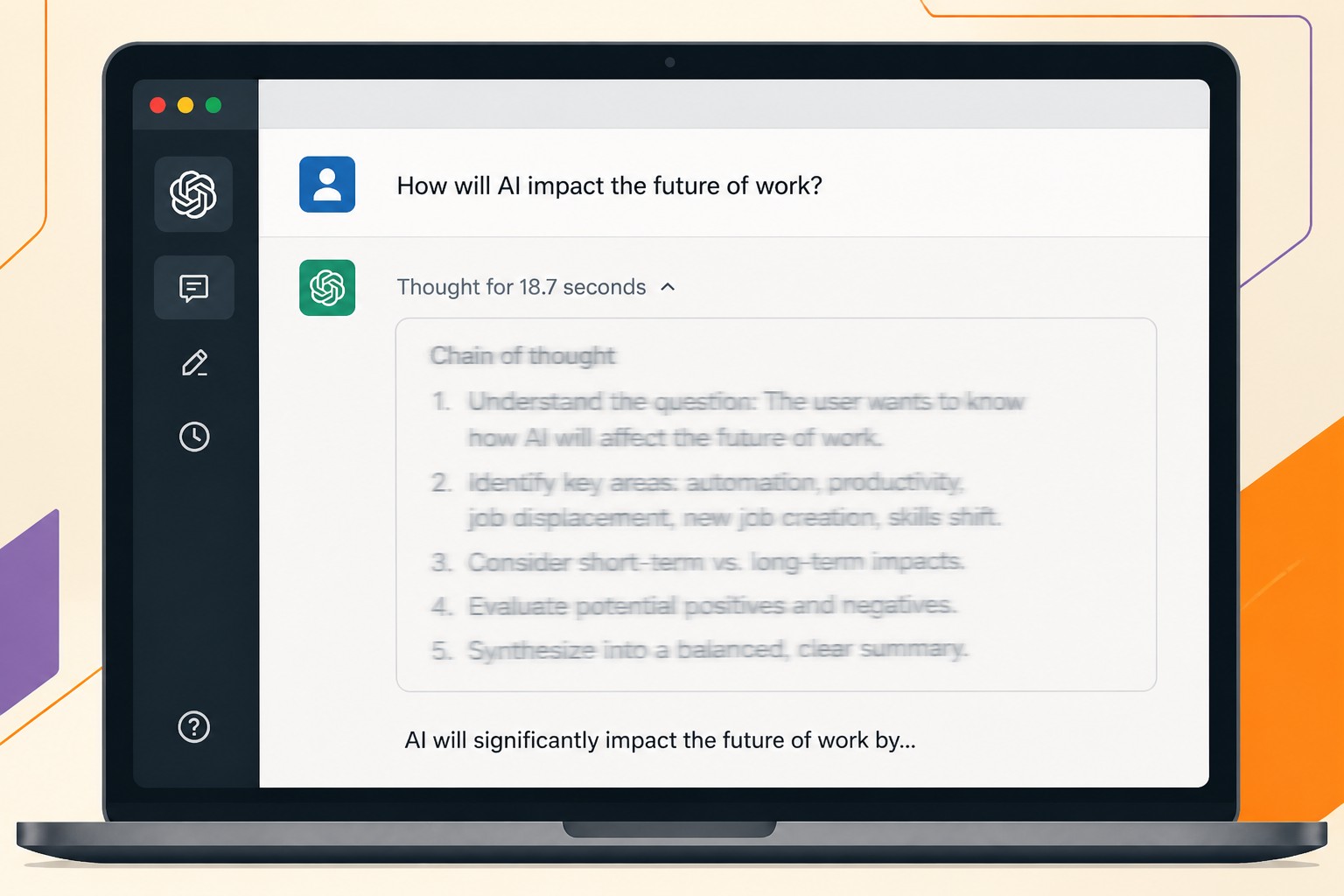
The working vocabulary of AI gained a new center of gravity this year, and it is not a capability. OpenAI's Astra, released in September 2026, is known for early use of opaque recurrence: a method in which a model pushes the same prompt through its own internal layers over and over instead of reasoning step by step in language a person can read. OpenAI says Astra preserves a legible chain of…

OpenAI claims AGI with Astra, a model it rates critical for cyber

OpenAI says its new model, GPT-6 Astra, is artificial general intelligence — by the company's own definition, "autonomous systems that outperform humans at most economically valuable work." The same model is the first OpenAI has ever placed in the "critical" category for cybersecurity capability, and the company has confirmed it shows a "substantial reduction in chain-of-thought…

KAIST and Naver find reasoning steps encoded in middle layers

Researchers at KAIST and Naver AI Lab report that the discrete steps a reasoning model writes out — pulling data, decomposing the problem, recalling a formula, computing — correspond to separable patterns inside the model's numeric representations. The separation is strongest in the middle layers, holds across three different models, and survives the case that matters most to anyone hoping to…