i
DATAIST
Back to feed

Research

Breakdowns of recent AI research: what the authors did and why it matters.

19 articles

VLWM predicts the future in language instead of pixels

When we ask a machine to help us cook dinner or swap a SIM card, it has to do more than recognize the objects in frame — it has to picture how the world will change from one step to the next. Most systems today see pixels and answer in short phrases, and long-horizon planning still does not work. The VLWM (Vision Language World Model) team proposes a different route: describe the future in…
Universal Deep Research compiles a written strategy into runnable code

When people say “deep research,” they usually mean a service that plans its own search, walks through sources, collects citations and hands back a tidy report. Convenient — and almost always locked to a single strategy and a single model family. The authors of Universal Deep Research (UDR) propose a different arrangement: let the user pick any LLM and write the research strategy themselves,…

Top LLMs reason alike but diverge sharply on sycophancy and rephrasing

Today, evaluating a large language model comes down to a single number on a benchmark. That is convenient, and it is not enough: two models post identical scores and behave nothing alike in conversation. A group of researchers proposes looking deeper — taking a model's "behavioral fingerprint" along several axes to see how it actually thinks. The idea is simple: measure a profile of cognitive…

The four levels between AI as a calculator and AI as an autonomous scientist

We are used to AI as a clever calculator: it helps with data analysis, but the decisions and the experiments stay with people. The researchers argue for a different view, in which agentic AI moves into the role of an autonomous research partner. It reads the literature, forms hypotheses, plans experiments, runs robots or simulations, analyzes the…

Self-written explanations are what let models read dark humor in memes

Not all jokes work the same way. Clean humor runs on wordplay and harmless incongruity; dark humor runs on painful subjects, cultural references and fine contrasts between the image and the caption. In memes this is especially visible: the picture says one thing, the text says another, and the meaning appears where they meet. Until recently there was no good multimodal dataset for dark humor…

Routing across eight LLMs beats GPT-5-medium by 7% at the same cost

Anyone who has wired a large language model (LLM) into a real product has run into the same choice: more accurate but expensive, or cheaper but worse. GPT-5, the authors note, is already moving toward a fix through test-time routing: easy queries go to a faster, cheaper model, hard ones to the powerful one. The Avengers-Pro team pushes further —…

Partial deepfake edits slip past both detectors and human viewers

We tend to picture deepfakes as clips that are synthetic end to end. What actually turns up in the wild, more and more often, is the careful partial swap: not the whole video, but a small piece of it — a gesture, a face, an object on the table, a few frames in the middle. Edits that precise do not catch the eye, and they hide perfectly inside genuine footage. The authors of FakeParts argue…

Paper2Agent turns a paper's code into an agent you can query

A paper is text, figures, and, somewhere in a repository, code. Then the grind starts: tracking down dependencies, setting up an environment, working out the API and the data formats. For a lot of people that is a high barrier to entry. Paper2Agent proposes something simpler: turn papers into AI agents you can address in natural language and run their methods on the spot. What used to be a…

OmniTry does mask-free virtual try-on by finding the spot itself

If you have ever tried to "try on" glasses or a tie on your own photo in an app, you know the catch: the system needs you to point out the region to replace by hand — draw a mask or a box. Across hundreds of item types that is awkward and scales badly. OmniTry takes a different route: the model finds the place where the object logically belongs and puts it there, with no masks and no extra…

Matrix-Game 2.0 generates interactive video at 25 FPS on a single H100

Interactive world models are a way to teach AI to sense the world rather than only describe it in words. Until recently, three obstacles stood in the way: there was not enough quality data with precise action labels; classic video diffusion models were too slow to compute and "forgot" the start of the clip; and errors compounded from frame to frame. Matrix-Game 2.0 offers a clear, practical…

Hallucinations persist because benchmarks reward confident guessing

Why do LLMs keep getting things confidently wrong when saying "I don't know" would serve everyone better? Researchers at OpenAI offer a clear answer: the root of the problem is statistical. It appears during pretraining and is then locked in by the way we evaluate models after fine-tuning. In short: the data can be free of errors and the training objective will still push the model toward…

Even GPT-5 solves fewer than 60% of live multi-tool agent tasks

MCP-based agents can already do a lot: search the web, work with files, draw charts, run calculations, call external APIs. But a demo on a single task is one thing, and sustained work in a realistic, shifting environment is another — one where service responses differ from run to run and several dozen tools are on offer at once. Most existing benchmarks miss this: they are short, synthetic,…

EnvX turns a repository into an agent that sets up and runs itself

Open repositories are full of ready-made work: scripts, models, datasets, demos. Getting any of it to actually run is still manual labor — install the dependencies, download the artifacts, read the docs, get the input arguments right. EnvX proposes something simple but powerful: agentize the repository. Turn it into an autonomous assistant that understands the project's own documents, builds…

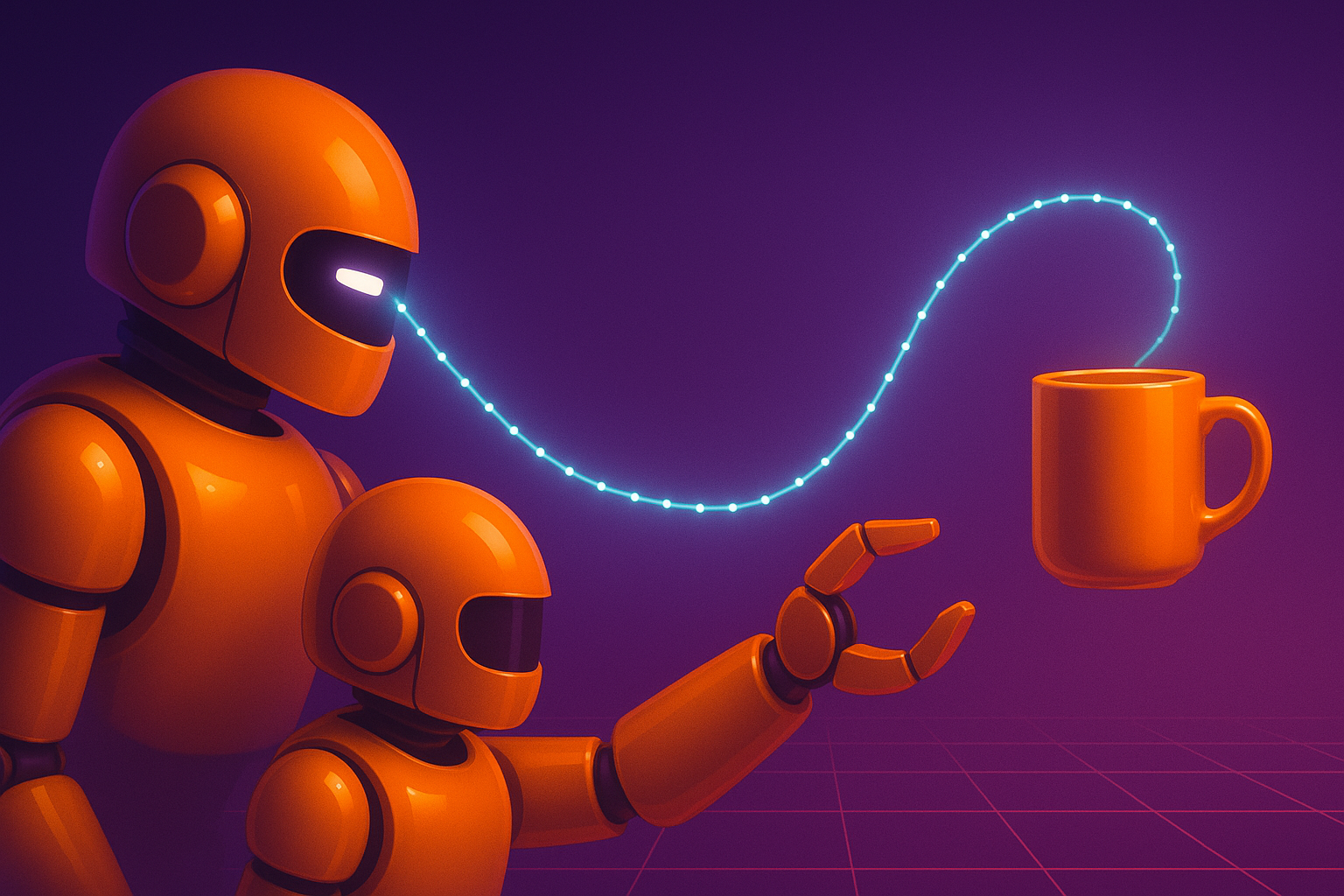
Embodied-R1 points instead of acting and hits 87.5% on real robot tasks

Robots increasingly see the world through a camera and read our written instructions. But that "knowledge" often fails to turn into the right action: the model knows what a cup is, yet not where to put it or how to get around the objects next to it. This distance between vision and action is the seeing-to-doing gap. The Embodied-R1 team proposes…

Case-based memory lets an agent improve without touching its weights

When we ask a large language model (LLM) to solve a hard problem, one well-crafted prompt no longer carries the job. In practice the work is a sequence of actions: search, read, write code, check, fix. The agent has to plan its steps, use tools and remember what it did before. Yet most agents today are either hardwired into rigid scripts that adapt badly to new conditions, or they demand…

BSC-Nav's three-layer memory lifts robot navigation to 78.5% success on HM3D

Most AI agents today are reactive: they see a frame and act, see the next frame and act again, and never build a coherent picture of the space around them. Hence the trouble with long routes, with reusing past experience, with flexibility. Biology solved this elegantly: the brain keeps landmarks, route knowledge and survey maps. BSC-Nav carries that principle over to robots and gives them a…

AgentScope 1.0 makes multi-agent systems work without the duct tape

Large language models (LLMs) already reason reasonably well, but the real value shows up when they can do something beyond generating text: query databases, call APIs, compute, drive a web browser. That is where the trouble starts — every provider has a different interface, tools scatter across the project, parallel calls and async are hard to reconcile, and traces of what the agent did are…

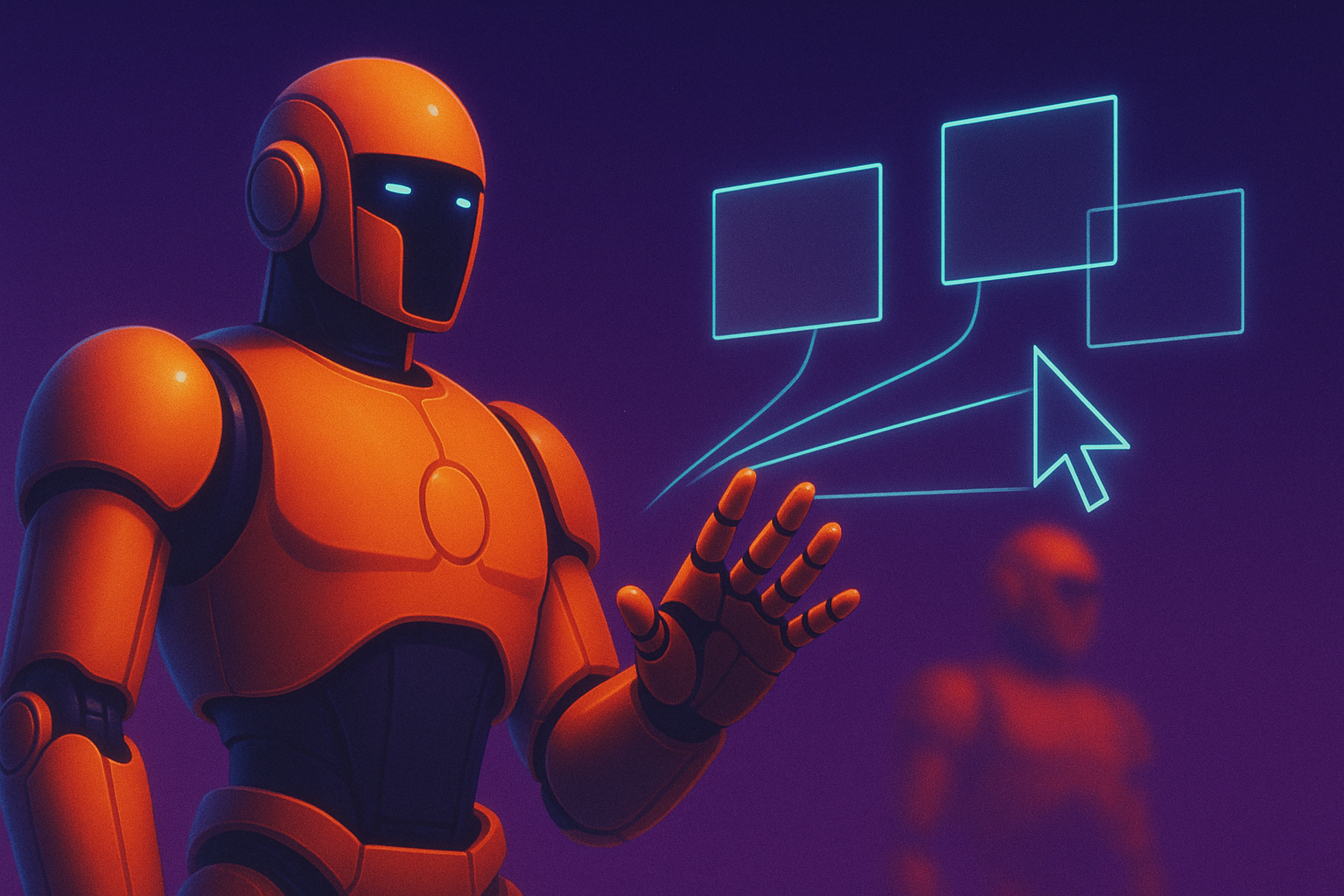
A million action steps from Chinese apps put UItron ahead of UI-Tars

Could AI agents ever work a computer the way people do — see the screen, understand it, click, launch apps and carry out long chains of tasks? That is no longer science fiction. A new generation of models, UItron among them, promises to reset what automation on desktop and mobile can look like.

A 31-subtype error taxonomy beats blind retries in text-to-SQL

Turning a human question into correct SQL is a surprisingly hard problem. Large language models write valid syntax well but miss the logic easily: they confuse tables, join on the wrong key, forget GROUP BY, apply the wrong filters. Plain self-correction from execution results doesn't always help — a query can run fine and even return something plausible that still isn't what the user asked…